An encryption key is a randomized string of bits used to encrypt and decrypt information. Typical key lengths are 128 and 256 bits for personal keys and 2048 for public keys. This standardization simplifies key management and supports a constant safety posture. It is essential for organizations that use a quantity of key management solutions, work with data in disparate techniques or need to modify suppliers. Secrets And Techniques management instruments are specialised software program solutions designed to mitigate these risks. They securely retailer, manage and control access to sensitive information, such as database passwords, API keys, tokens and different credentials.
Types Of Encryption Keys
Encryption protects the information within the cloud, and to make sure its confidentiality and integrity, securing the encryption keys is of paramount significance. A key management system may help automate and enforce key policies, making the method even more environment friendly and lowering errors. It can help organizations strengthen knowledge security, stop unauthorized access and comply with regulatory requirements. In an period the place digital communication underpins practically each side of our lives, the significance of securing delicate data can’t be overstated. Cryptographic keys function the backbone of contemporary encryption techniques, enabling safe knowledge transmission, authentication, and privateness in a world more and more vulnerable to cyber threats. Whether you are a cybersecurity skilled, a software developer, or a business chief, understanding cryptographic keys is crucial for safeguarding your digital assets.
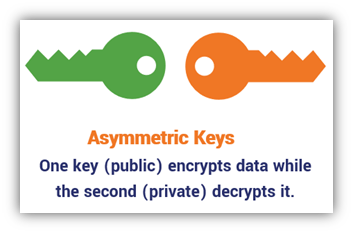
Use Circumstances For Symmetric (private) Key
Lifecycle of keys must be automated to guarantee that they are rotated regularly. Automation is the enabler that makes every other key administration greatest apply sustainable at scale. Market Research Future tasks that the info encryption market will develop from $13.four billion in 2022 to $38.5 billion by 2023, a sturdy 16.3 p.c CAGR. Protect knowledge everywhere—discover, classify, monitor and safe sensitive data throughout your setting. Identity and access management (IAM) is a cybersecurity self-discipline that deals with user entry and resource permissions. Many KMS offerings also function “deliver your individual key,” or “BYOK.” This flexible choice permits companies to take care of management over their keys even when using third-party cloud providers.
Encryption key administration consists of several levels, every critical to the security and effectiveness of encryption methods. These phases type the key administration lifecycle, which covers the entire journey of a cryptographic key from its creation to its eventual destruction. Staying forward of these developments and investing in superior key administration solutions and systems might help organizations make sure that their encryption practices stay future-proof and efficient.
Key management systems frequently function automated key rotation for consistency and security. After encryption keys are generated, they’re distributed to the mandatory entities. For instance, a symmetric key may be created utilizing a safe random quantity https://womenbabe.com/cryptocurrency-trading-with-the-nexaveropro-platform.html generator and then distributed securely through a key trade protocol or a pre-shared channel. When you copy, migrate, or again up encrypted database recordsdata, ensure that you also back up the encryption key (and/or the optional password key). In Any Other Case, you will be unable to learn the info afterward, as it will be encrypted.
Constructing A Cryptographic Key Management Coverage
Sadly, many organizations have bother preserving their cryptographic keys in verify. It’s not uncommon for hackers to get ahold of them — and in flip, entry to sensitive information techniques. Encryption key administration refers to the insurance policies and procedures for generating, distributing, storing, organizing, and defending cryptographic keys.
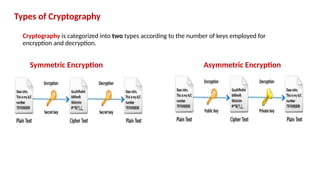
A cryptographic algorithm is a computational procedure or formulation used to encrypt and decrypt information to ensure safety and privateness. A cryptographic key, sometimes referred to as an encryption/decryption key, is a string of knowledge used by a cryptographic algorithm to transform plain text to ciphertext (human unreadable output). Session keys, additionally called symmetric keys, are used with symmetric encryption algorithms.
- As Soon As the protocols and algorithms are understood, you’ll find a way to begin to define the different types of keys that will support the applying’s objectives.
- You can dive deeper into cloud key administration by signing up for the course right here.
- Selection of the cryptographic and key management algorithms to use within a given utility ought to start with an understanding of the aims of the appliance.
- Although message integrity is often offered using non-cryptographic techniques often identified as error detection codes, these codes could be altered by an adversary to impact an action to the adversary’s profit.
- Effective key management rests on a stack of specialised hardware, entry controls, and operational data, most of which stay invisible till one thing breaks or an auditor asks to see them.
Access controls such as role-based entry control (RBAC) and multi-factor authentication (MFA) might help guarantee only licensed people or methods have entry to these keys, additional securing their utilization. Hash capabilities create a small, fixed-length digest worth (known as the hash value) from a sometimes larger value which could be of arbitrary measurement. By changing the preliminary enter value into a more compressed worth, hash features are an efficient and secure mechanism for ensuring data integrity in asymmetric encryption. Nonetheless, since hashing is a one-way course of with no concept of a key or decryption routine, initial input values can’t be decrypted and accessed after being hashed. While some enterprises are content material allowing cloud service providers (CSPs) to generate and manage cryptographic keys for them, others would possibly really feel it’s at odds with their security policies. Usually, knowledge bodily resides with the CSP and out of the organization’s direct control.
All CSA trainings are compliant with NASBA requirements for CPE providers. Hardware Security Modules (HSMs) handle cryptographic operations within a safe hardware boundary, making certain that keys by no means leave the protected reminiscence. Message Authentication Codes (MACs) present a robust mechanism for verifying both the integrity and authenticity of a message.
IBM supplies comprehensive knowledge security companies to protect enterprise data, applications and AI. KMIP is not a key administration resolution but a standardized protocol designed to facilitate the interoperability of key management techniques throughout totally different platforms and providers. Storing keys in software might be more convenient, however it can additionally carry a higher safety risk than hardware-based storage options like HSMs. Explore various views on cryptography with structured content material covering algorithms, functions, vulnerabilities, and future trends in secure data techniques.

